

AI Overview:
Multifunction printer (MFP) contracts go far beyond simply leasing or buying a machine — they combine hardware, service, and supplies into one long-term agreement that can last 36 to 60 months. Understanding the fine print is essential for avoiding surprise costs and ensuring your printer setup actually supports your business goals.
Understanding the Basics of Multifunction Printer Agreements
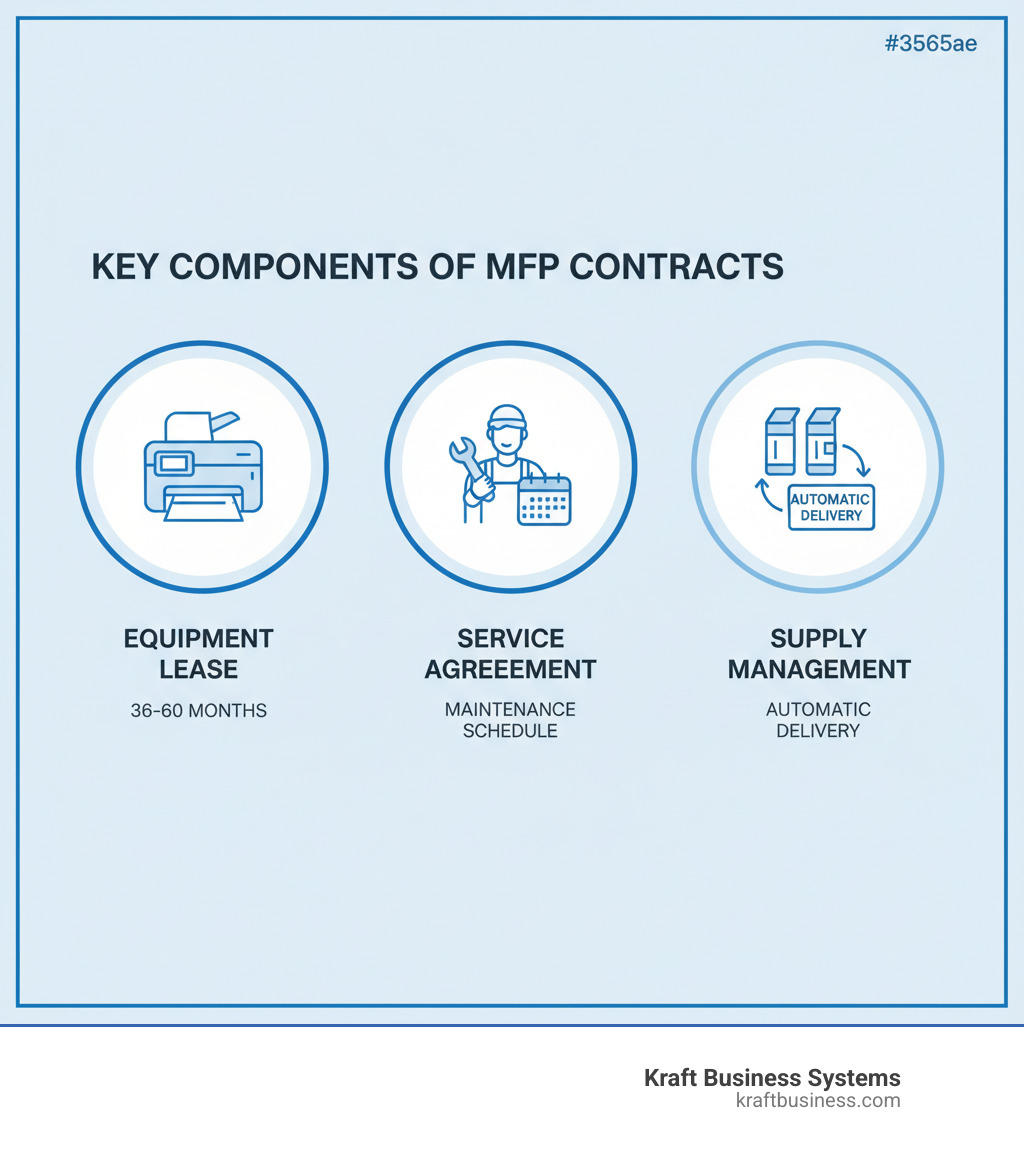
Multifunction printer contracts are agreements that combine equipment leasing or purchasing with ongoing service and maintenance. These contracts typically last 36 to 60 months and include three main components:
Key Components of MFP Contracts:
- Equipment Lease/Purchase – The actual printer hardware
- Service Agreement – Maintenance, repairs, and technical support
- Supply Management – Toner, drums, and replacement parts
The challenge? These agreements are often packed with legal jargon and hidden clauses that can lock you into unfavorable terms. According to industry research, many businesses find themselves paying for equipment that no longer serves their needs due to automatic renewal clauses and rigid cancellation policies.
Most contracts include automatic renewal periods that can extend your agreement by 90 days up to three times if you don’t provide proper notice – typically 60 to 90 days before your contract expires.
Whether you’re a small business printing 3,000 pages monthly or a large enterprise handling over 10,000 pages, understanding these contracts is crucial for avoiding costly mistakes and ensuring your printing solution grows with your business.
Multifunction printer contracts terms to know:
- Short-term printer rentals
- multifunction printer lease
Decoding the Language: Common Terms in MFP Printer Contracts
Walking into multifunction printer contracts without understanding the terminology is like trying to steer a maze blindfolded. The good news? Once you decode the jargon, these agreements become much less intimidating and far more manageable.
Let’s start with the two most common lease structures you’ll encounter. A Fair Market Value (FMV) Lease typically offers lower monthly payments, making it easier on your budget. At the end of your term, you can return the equipment, renew your lease, or purchase the printer at its current market value. This flexibility makes FMV leases perfect for businesses that like to stay current with technology.
On the flip side, a $1 Out Lease (also called a finance lease) comes with slightly higher monthly payments but guarantees ownership at the end. For just one dollar, the equipment becomes yours. This option works beautifully if you plan to keep the printer long-term and want to benefit from depreciation tax deductions.
The lease period or term length usually spans 36 to 60 months. While longer terms mean smaller monthly payments, technology moves fast. That cutting-edge printer might feel outdated by year four of a five-year agreement.
Now, let’s talk about the costs that really matter in your day-to-day operations. Cost-Per-Copy (CPC) is the heart of your service agreement—it’s what you pay for each page that comes out of your printer. Black and white copies cost less, while color prints carry a premium. Understanding your CPC helps you budget accurately for your actual printing needs.
Your base rate and monthly minimums work together to create a predictable foundation for your printing costs. The base rate covers a set number of included prints each month. Even if you print less than this minimum, you still pay the full base rate. It’s like a gym membership—you pay whether you use it or not.
But what happens when you exceed those minimums? That’s where overage fees come into play. These additional charges kick in when your printing volume goes beyond your contract limits. If your plan includes 3,000 prints but you need 4,000, those extra 1,000 pages will cost you. This is why accurately estimating your print volume before signing is crucial.
Here’s where many businesses get confused: duty cycle versus recommended monthly volume. The duty cycle represents the absolute maximum pages a printer can handle in extreme conditions—think of it as the printer’s theoretical limit. However, the recommended monthly volume (usually about 10% of the duty cycle) is what you should actually aim for to keep your printer running smoothly and avoid frequent service calls.
Understanding these terms transforms you from a passive contract signer into an informed negotiator. For deeper insights into the financial aspects of printer agreements, our comprehensive guide on printer leasing costs can help you make even smarter decisions for your business.
The Big Decision: Leasing vs. Buying Your Multifunction Printer
One of the most important decisions you’ll face when getting a multifunction printer is whether to lease or buy. This choice shapes everything from your monthly budget to how quickly you can adapt to new technology. The good news? Neither option is inherently better—it all depends on your business’s unique situation and goals.
Think of it this way: leasing is like renting an apartment, while buying is like purchasing a home. Each approach serves different needs and lifestyles.
| Feature | Leasing a Multifunction Printer | Buying a Multifunction Printer |
|---|---|---|
| Upfront Cost | Minimal or no initial investment, frees up capital | Significant upfront capital outlay |
| Long-Term Cost | Potentially higher total cost over the equipment’s lifespan | Lower total cost if kept for many years, but includes maintenance |
| Maintenance | Often included in the contract, predictable service costs | Responsible for all maintenance, repairs, and supplies costs |
| Technology | Easy to upgrade to newer models at lease end | Owns equipment, upgrades require new purchase |
Technology advances quickly, and your choice should align with how often you plan to upgrade. If you’re the type of business that loves having the latest features and security updates, leasing might be your best friend. But if you prefer the stability of ownership and plan to use equipment for many years, buying could save you money in the long run.
Advantages of Leasing
Leasing has become incredibly popular among businesses in Grand Rapids and throughout Michigan, and for good reason. It’s like having a safety net that keeps your cash flow steady while ensuring you never get stuck with outdated technology.
The lower initial investment is often the biggest draw. Instead of writing a large check upfront, you can preserve your capital for other critical business needs—whether that’s hiring new staff, expanding your inventory, or investing in marketing. One of our clients, a growing law firm in Grand Rapids, chose leasing specifically because it allowed them to invest their available cash in a new practice area instead of tying it up in office equipment.
What really makes leasing attractive is the predictable monthly expenses. You know exactly what you’ll pay each month, making budgeting a breeze. No surprise repair bills or emergency maintenance costs—just one consistent payment that you can plan around.
The included maintenance and support component is where leasing really shines. When your printer jams at 4 PM on a Friday (and they always seem to know the worst possible timing), you’re not scrambling to find a technician or wondering if the repair will cost more than the machine is worth. Most lease agreements bundle everything together, so you get peace of mind along with your equipment.
Perhaps most importantly, leasing offers simplified tech upgrades. In three to five years, when your lease ends, you can easily step up to newer technology with better security features, faster printing speeds, and improved efficiency. You’re never stuck with equipment that’s holding your business back.
From a financial perspective, lease payments are often tax-deductible as operating expenses, which can provide significant savings. Of course, you’ll want to check with your accountant about your specific situation.
For more insights on why this approach works so well for many businesses, take a look at our detailed guide on leasing over buying printers for office.
Advantages of Buying
While leasing offers flexibility, buying a multifunction printer outright has its own compelling advantages, especially for businesses with stable, long-term printing needs and sufficient capital reserves.
Full ownership of the asset means complete control. You decide how the equipment is used, when it’s serviced, and what happens to it when you’re done. There are no lease terms to worry about, no automatic renewal clauses, and no restrictions on modifications or usage.
The math often favors buying if you plan to keep your equipment for many years. While the upfront cost is higher, the lower total cost over time becomes apparent when you’re not making monthly lease payments year after year. A manufacturing company we work with in the Grand Rapids area calculated that buying made sense for their high-volume printing needs because they planned to use the same equipment for seven years.
Once you’ve paid for your equipment, you enjoy freedom from monthly payments. Your only ongoing costs are supplies, maintenance (if you choose a separate service contract), and occasional repairs. This can significantly improve cash flow once the initial investment is behind you.
Freedom from contract terms is another major benefit. You’re not bound by early termination fees, automatic renewals, or end-of-lease obligations. If your business needs change, you have complete flexibility in how you handle your printing assets.
Finally, well-maintained multifunction printer contracts equipment can retain some resale value. While technology does depreciate, quality machines from reputable manufacturers may still have worth when you’re ready to upgrade, helping offset your next equipment purchase.
The key is honestly assessing your business’s financial position, growth plans, and technology preferences. Both leasing and buying can be smart choices—it just depends on which aligns better with your specific circumstances and goals.
The details matter. A thorough review of your agreement is the single most important step to avoid future surprises. A good contract should feel like a partnership, not a trap. Pay close attention to clauses that dictate the terms of renewal, cancellation, and end-of-lease procedures.

Think of it this way: you wouldn’t buy a house without reading the mortgage agreement, so why sign a multifunction printer contract without understanding every clause? We’ve helped countless Michigan businesses find hidden fees and problematic terms that could have cost them thousands of dollars.
Understanding the Fine Print in Multifunction Printer Contracts
Here’s where many businesses get caught off guard. Multifunction printer contracts often contain clauses that seem harmless at first glance but can create significant headaches later.
Automatic renewal clauses are perhaps the biggest trap. These sneaky provisions mean your contract will automatically extend—sometimes for another full year—if you don’t provide written notice within a specific timeframe. We’ve seen businesses continue paying for equipment they no longer need simply because they missed the notice period deadline, which typically ranges from 60 to 90 days before the lease ends.
One client in Grand Rapids finded this the hard way during the pandemic. Their office was closed, but they were still locked into paying for a printer nobody was using because they missed their renewal notification window by just two weeks.
Rigid cancellation policies and early termination penalties are another area of concern. Life happens—businesses grow, shrink, move, or change direction. But many contracts make it extremely expensive to exit early, sometimes requiring you to pay the full remaining balance or hefty penalty fees.
Buyout clauses can also be problematic. These determine what happens if you want to purchase your equipment mid-lease or switch vendors. Some contracts make buyouts prohibitively expensive, essentially trapping you with your current provider.
Watch out for escalation clauses that allow for annual price increases. While some adjustment for inflation is normal, we’ve seen contracts with automatic increases of 7-10% per year. After a few years, you might be paying significantly more than you originally budgeted.
The key is understanding these terms before you sign. Mark your lease end date on your calendar with a big reminder, and always get any verbal promises in writing. For guidance on handling your current equipment, check out our guide on what to do with your old copier: best options explained.
Key End-of-Lease Options
As your multifunction printer contract approaches its end, you’ll face several choices. Understanding these options early helps you plan ahead and avoid rushed decisions.
Lease renewal is the simplest path—you continue with the same equipment, often at a reduced rate since the machine is older. However, make sure you’re not automatically renewed without your consent.
Equipment upgrade is popular for businesses wanting the latest technology. You trade in your current machine for a newer model and start a fresh lease term. This keeps you current with security updates and new features.
If you’re ready to move on, the return process involves shipping the equipment back to the vendor. Be aware that you might be responsible for shipping costs and specific packing requirements. Failure to return equipment in good condition could result in additional charges.
For those who’ve grown attached to their machine, the purchase option lets you buy the equipment. With FMV leases, you’ll pay the fair market value. With $1 Out leases, you simply pay the nominal fee and take ownership.
Planning ahead for these decisions ensures you’re not scrambling as your lease expires. For more comprehensive strategies on managing copier leases, explore our resources on commercial copier leasing.
Understanding the Service Agreement Component
A multifunction printer contract isn’t just about the hardware; it includes a vital service component that keeps your device running smoothly. Think of it as the difference between buying a car and having a full-service maintenance plan—one keeps you on the road, while the other might leave you stranded when something breaks.
Understanding what is and isn’t covered is crucial for managing expectations and avoiding those dreaded surprise bills that can pop up when you least expect them. We’ve seen too many businesses in Grand Rapids get caught off guard by repair costs that they assumed were included in their agreement.
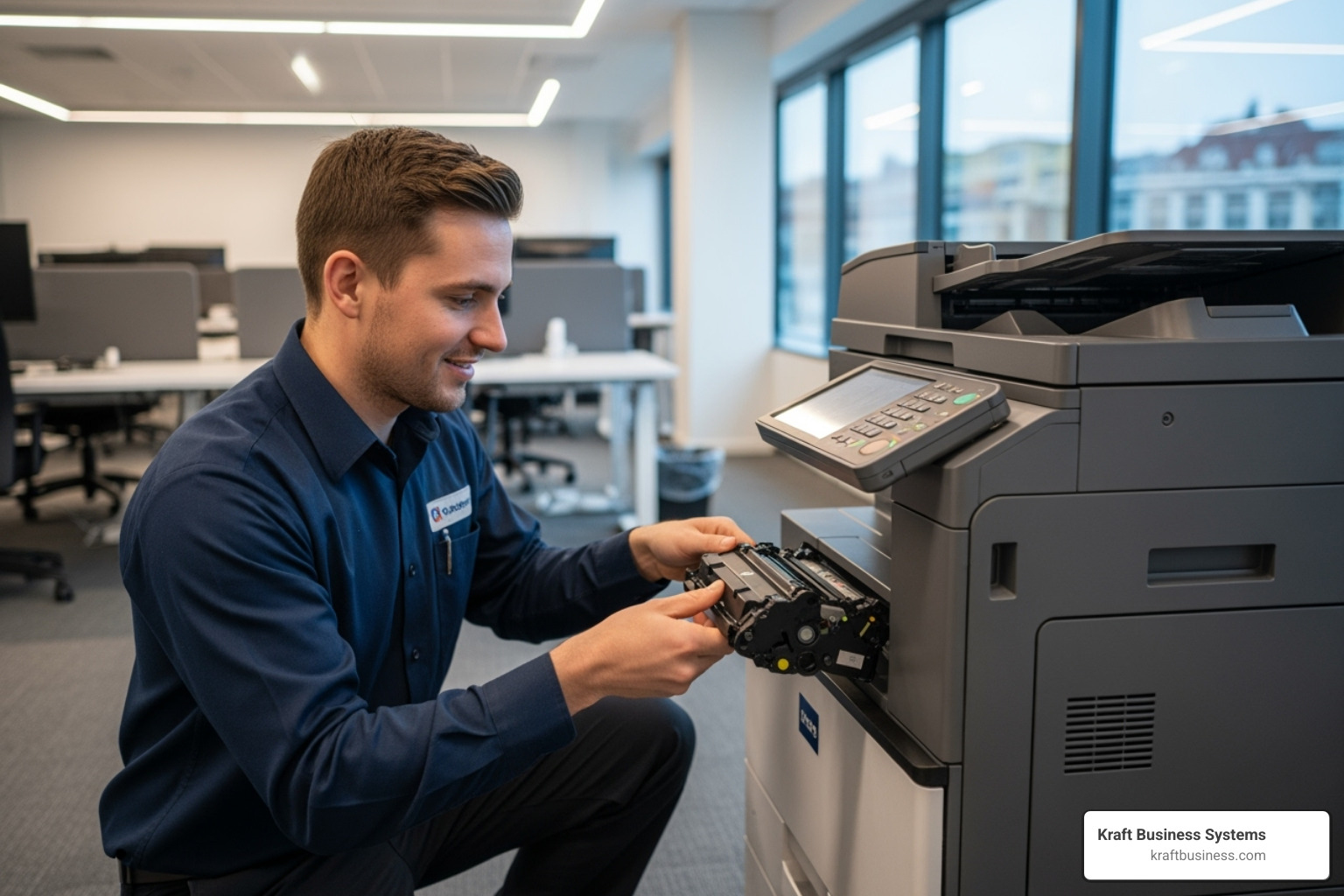
What’s Typically Covered?
A well-structured service agreement aims to minimize downtime and keep your business humming along without interruption. The best agreements feel almost invisible—everything just works, and supplies appear when you need them.
Toner and ink are usually your biggest ongoing expense after the lease payment itself, so most quality service contracts include both the cost and delivery of these supplies. Some vendors even offer automated replenishment, where your printer essentially “calls home” when it’s running low, and new cartridges show up at your door without you having to think about it.
Drums and fusers might sound like obscure printer parts, but they’re actually critical components that wear out over time—kind of like brake pads on your car. These consumable parts can be expensive to replace, so having them covered in your service agreement provides real peace of mind and predictable costs.
Routine maintenance is where a good service provider really earns their keep. Regular check-ups, cleaning, and adjustments keep your machine running at peak performance. Just like that oil change for your car, this preventive care can save you from much bigger problems down the road.
When things do go wrong, on-site repairs mean a qualified technician comes to your office to diagnose and fix the problem. Response times are usually specified in your contract—next business day is common, though some premium agreements offer same-day service for critical situations.
Parts and labor coverage protects you from potentially expensive repair bills. When a component fails, both the replacement part and the technician’s time to install it are typically included. Technical support gives you access to a help desk for troubleshooting, driver installations, or those “how do I…” questions that inevitably come up.
Some premium service agreements even include loaner units if your MFP needs extensive repair work. While not standard everywhere, this can be a business-saver if your printer is critical to daily operations.
For a comprehensive overview of what should be included in a maintenance agreement, consult our guide on key details that need to be included in a MPS maintenance agreement.
What’s Usually NOT Covered?
Just as important as knowing what’s included is understanding what falls outside your service agreement. These exclusions can lead to unexpected costs if you’re not prepared for them.
Paper might seem obvious, but it’s worth mentioning—your service contract covers the machine and its operation, not what you’re printing on. Similarly, staples for finishing options like binding are typically a separate purchase, even though the stapling mechanism itself would be covered under repairs.
Here’s where things get a bit more technical: network or IT issues usually aren’t covered by your printer service agreement. If your MFP can’t connect to your Wi-Fi, or employees can’t print from their computers due to driver conflicts, that’s generally your IT team’s responsibility, not your printer vendor’s. The service provider handles the physical machine, but your internal network infrastructure is a separate domain.
User-inflicted damage is another common exclusion. We’ve all been there—someone forces a paper jam or accidentally damages something while trying to be helpful. While accidents happen, repairs resulting from improper use typically aren’t covered under standard agreements.
Environmental damage from power surges, floods, or other “acts of God” almost never fall under printer service contracts. These situations would typically be handled through your business’s property insurance rather than your printing agreement.
Understanding these boundaries helps set realistic expectations and prevents those “I thought that was covered!” moments that can strain relationships with your service provider. As one industry analysis points out in the “science” behind the cost of your copier contract, the details in service agreements can significantly impact your total costs, making it essential to review every aspect of your coverage carefully.
Beyond the Basics: Managed Print Services (MPS)
For businesses looking to optimize their entire print environment, a standard lease for a single device may not be enough. Modern agreements like Managed Print Services (MPS) offer a holistic approach, focusing on solutions and outcomes rather than just a single machine. We’ve seen MPS transform print environments for businesses of all sizes, from small offices in Elk Rapids to large enterprises in Lansing.
Think of it this way: if a traditional multifunction printer contract is like buying a single car, MPS is like having a complete fleet management service that handles everything from maintenance to fuel efficiency across all your vehicles.
What are Managed Print Services (MPS)?
Managed Print Services (MPS) is a comprehensive solution where a provider, like us at Kraft Business Systems, takes over the management of your entire printing infrastructure. This isn’t just about fixing a broken printer when it jams at the worst possible moment (we’ve all been there!). It’s about optimizing your print fleet, reducing costs, enhancing security, and improving workflow efficiency across all your devices, including A3 and A4 multifunction devices, production printers, and document scanners.
The magic of MPS starts with a fleet assessment and optimization. We analyze your current printing environment – what devices you have, where they’re located, who uses them, and what your actual print volumes are. This detective work often reveals surprising inefficiencies. Did you know some businesses overestimate their print needs by nearly 40%? We’ve walked into offices where three printers sat within 20 feet of each other, each barely used.
Proactive monitoring and maintenance is where technology really shines. Through specialized software, we remotely monitor your devices for performance, error codes, and supply levels. This means we can address potential issues before they become the dreaded “printer’s down again” crisis that always seems to happen right before an important client meeting.
Say goodbye to the sticky note reminders about ordering toner! Automated supply replenishment means our systems automatically detect when your toner levels are low and ship replacements directly to your door. No more emergency runs to the office supply store or finding you’re out of black toner five minutes before a big presentation.
Improved document security addresses a vulnerability many businesses overlook. Printers are often the weak link in cybersecurity. MPS includes implementing secure print release, user authentication, data encryption, and secure disposal of device hard drives to protect your sensitive information. Your financial reports won’t be sitting in the printer tray for anyone to see.
Instead of juggling multiple invoices for different devices, supplies, and services, consolidated billing offers a single, predictable monthly bill. Your accounting team will thank you for simplifying their lives. Plus, detailed usage reporting provides regular insights into your print volumes, costs, and device usage patterns, giving you valuable data to make smarter business decisions.
To learn more about this integrated approach, check out our explanation of Managed Print Services (MPS) explained.
Benefits of an MPS Agreement
The advantages of implementing an MPS agreement extend far beyond just having your printers work reliably. It’s about strategic management of a critical business function that touches every department.
Significant cost savings come from multiple angles. By optimizing your fleet, reducing unnecessary printing, implementing cost-per-page models, and consolidating suppliers, MPS can dramatically lower your overall printing expenses. This includes both direct costs like supplies and maintenance, and indirect costs like the time your IT person spends troubleshooting the third-floor printer every Tuesday.
Speaking of your IT team, reduced IT burden might be the benefit they appreciate most. Your internal IT staff can stop being the “printer patrol” and focus on higher-value strategic initiatives. We handle all the day-to-day printer management, troubleshooting, and maintenance. Many IT professionals, tired of dealing with the infamous “PC LOAD LETTER” dilemma, appreciate finally being able to offload these tasks.
Increased employee productivity happens when reliable, well-maintained equipment and automated supply delivery mean your staff spends less time dealing with printer jams or empty toner cartridges. More time spent on their core responsibilities means better business outcomes.
Improved security and compliance helps you implement robust security measures to protect sensitive data transmitted through or stored on your MFPs. This is especially critical for businesses handling personal or health information, where regulatory compliance isn’t optional.
Finally, scalability for business growth ensures your printing infrastructure adapts as your company evolves. Whether you’re opening new offices, accommodating remote workers, or downsizing, an MPS agreement can easily scale your printing solutions up or down without the rigid limitations of traditional equipment contracts.
If you’re looking to streamline your operations and gain control over your printing environment, exploring MPS is a smart move. Find more about the comprehensive benefits in our article on Managed Print Services Benefits.
Frequently Asked Questions about Multifunction Printer Contracts
We understand that multifunction printer contracts can raise a lot of questions. Over our years of helping businesses across Michigan—from Wyoming to Suttons Bay—we’ve heard just about every concern imaginable. Here are the questions that come up most often, along with our straightforward answers to help you make an informed decision.
Conclusion
Understanding multifunction printer contracts is your key to making smart, cost-effective decisions that truly serve your business needs. Think of it as learning to read the fine print before signing any major agreement – except this time, you’re armed with the knowledge to spot the traps and negotiate better terms.
We’ve walked through the essential terminology that transforms confusing jargon into plain English. You now know the difference between Fair Market Value leases and $1 Out leases, understand how cost-per-copy structures work, and can spot those sneaky automatic renewal clauses from a mile away. You’ve also weighed the pros and cons of leasing versus buying, considering factors like cash flow, technology upgrades, and long-term costs.
Most importantly, you’ve learned to scrutinize the fine print – those notice periods, early termination penalties, and escalation clauses that can make or break your agreement. Whether you’re considering a simple lease for a single device or exploring the comprehensive benefits of Managed Print Services, you’re now equipped to ask the right questions and avoid common pitfalls.
At Kraft Business Systems, we’ve been helping businesses across Michigan – from Grand Rapids to Ann Arbor, Lansing to Traverse City – steer these complexities for years. Our diverse team of consultants understands that every business has unique printing needs, and we believe in transparency over sales pressure. We’d rather spend time educating you about your options than rushing you into an agreement that doesn’t fit.
A good multifunction printer contract should feel like a partnership, not a burden. It should grow with your business, provide predictable costs, and give you the flexibility to adapt when your needs change. Most importantly, it should free you up to focus on what you do best – running your business.
Ready to find a printing solution that actually works for you? Let us help you cut through the industry jargon and craft a multifunction printer contract that’s perfectly custom to your business needs. Contact us to simplify your copier and printer needs and find how the right agreement can become a strategic advantage rather than just another monthly expense.