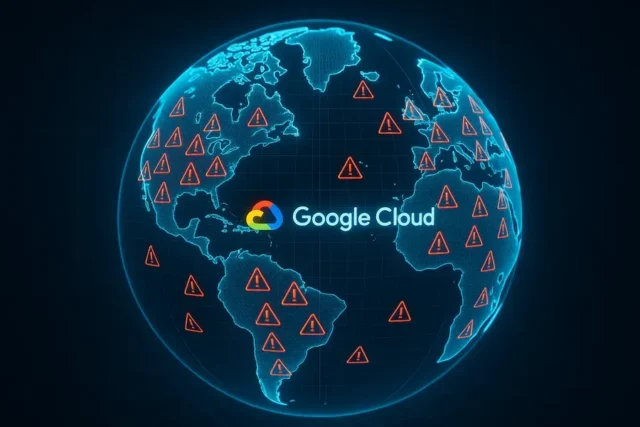
On the afternoon of June 12, 2025, the internet collectively stumbled. A widespread service disruption originating from Google Cloud caused ripple effects that knocked out access to some of the most popular platforms on the web. Spotify, Discord, Snapchat, and several Google services—including Gmail, Google Drive, and Meet—experienced significant downtimes. Though the outage lasted only a few hours, its impact served as a stark reminder of just how intertwined the digital world has become.
Google Cloud Outage Sends Shockwaves Through Major Services
When and How It Happened
The disruption began around 1:50 p.m. Eastern Time. Users started flooding outage monitoring platforms like Downdetector, reporting difficulties logging into or accessing their favorite applications. Spotify users encountered cryptic error messages that pointed to authentication issues. Discord channels went dark, and even the reliable Google Search saw interruptions. Behind the scenes, Google’s internal systems were flagging failures within their Identity and Access Management (IAM) system—a critical service responsible for authenticating users across all Google platforms.
Google Cloud Outage Sends Shockwaves Through Major Services
The Ripple Effect Across the Internet
As the outage spread, it quickly became clear that this wasn’t just a hiccup affecting a single service. The problem was embedded in the very infrastructure that powers modern web applications. With IAM services disrupted, any system relying on Google’s cloud-based authentication began to falter. From smart speakers and messaging platforms to developer tools and business applications, the disruption was felt globally.
Spotify was one of the most heavily affected platforms, with over 46,000 outage reports in the U.S. alone. Users found themselves abruptly cut off from their music libraries and playlists. Discord wasn’t far behind, experiencing over 11,000 reports of issues. Even Snapchat and Shopify were affected, and Google’s own suite of services saw tens of thousands of users unable to access Gmail, Calendar, and Drive. Developers using platforms like Replit found their tools nonfunctional. Cloudflare, a major internet infrastructure company, initially appeared impacted but later clarified that the disruptions stemmed from their dependency on Google Cloud services.
Google Cloud Outage Sends Shockwaves Through Major Services
A Delayed Response
Throughout the afternoon, Google’s status dashboard gradually reflected the widespread impact. At first, updates were sparse, leaving users and businesses in the dark. As pressure mounted, Google acknowledged the core issue was tied to their IAM service. By around 6:16 p.m. ET, Google announced that most services were returning to normal, although residual issues lingered into the evening.
Google Cloud Outage Sends Shockwaves Through Major Services
Understanding the Core Issue
The root cause of the disruption lay in the failure of Google Cloud’s IAM system. IAM plays a crucial role in verifying identities and permissions, and when it falters, the cascading effects are immediate. In this case, systems that couldn’t authenticate users simply stopped working. Services that depend on cloud-hosted identities, such as Spotify and Discord, couldn’t validate user sessions. This rendered their front-end systems effectively useless, even if their core infrastructures remained intact.
Google Cloud Outage Sends Shockwaves Through Major Services
A Centralized Risk
This incident was not just a technological mishap—it was a wake-up call. It highlighted how heavily the internet relies on just a handful of cloud providers. When one pillar shakes, the whole structure feels the tremor. Google Cloud, Amazon Web Services (AWS), and Microsoft Azure collectively support a large portion of today’s digital economy. A vulnerability in any of these can bring a significant portion of the web to its knees.
Google Cloud Outage Sends Shockwaves Through Major Services
Balancing Convenience and Resilience
Businesses and developers are now faced with a sobering reality: the convenience and efficiency of centralized cloud services come with inherent risks. Cloud infrastructure, while robust and scalable, is not infallible. Outages like the one on June 12 underscore the importance of designing systems that can tolerate failure—whether through redundancy, multi-cloud strategies, or fallback procedures.
Google Cloud Outage Sends Shockwaves Through Major Services
The Communication Breakdown
Another pressing issue that the outage exposed is the communication gap during crises. Google’s delay in acknowledging the issue and providing regular updates led to frustration and confusion. For organizations and end-users alike, clarity during outages is essential. The longer the silence, the more room there is for speculation, panic, and misinformation. Transparency, even when full details are not yet known, helps maintain trust.
Google Cloud Outage Sends Shockwaves Through Major Services
Business and Financial Impact
From a financial perspective, the outage may have caused temporary losses for businesses that rely on real-time online transactions or cloud-based productivity tools. While Google’s stock only dipped slightly, other companies that were affected saw minor yet noticeable impacts. Cloudflare’s shares dropped by about 5%, reminding investors and executives alike that uptime is critical to a company’s valuation.
Google Cloud Outage Sends Shockwaves Through Major Services
Disruption at the User Level
Users, on the other hand, were met with a more personal inconvenience. People found themselves unable to listen to music, message friends, or check emails. For a generation that depends on constant digital access, even a few hours without these tools felt jarring. It wasn’t just a matter of entertainment or convenience—for many, it interrupted work, communication, and daily life.
Google Cloud Outage Sends Shockwaves Through Major Services
Steps Toward Digital Resilience
Moving forward, organizations should take steps to audit their cloud dependencies. This means understanding what services rely on what infrastructure, and building in fail-safes where possible. Multi-cloud environments, which distribute workloads across multiple cloud providers, are one way to hedge against outages. So is ensuring that key functionalities can still operate in read-only or offline mode if authentication services fail.
Technical teams should also revisit their incident response protocols. Regular chaos engineering exercises, where systems are intentionally disrupted to observe their response, can help identify weaknesses before real-world outages strike. Companies should also push for clearer SLAs (Service Level Agreements) with their cloud providers that include transparency expectations during service disruptions.
Google Cloud Outage Sends Shockwaves Through Major Services
What Happens Next
Google, for its part, has committed to publishing a detailed incident report. Early communications suggest the company is reviewing the IAM system’s architecture to prevent future failures. They also issued an apology, acknowledging the breadth of the impact and the disruption caused to end-users and businesses alike.
June 12, 2025 will likely be remembered not for the services that went down, but for what it revealed about the fragility of our digital world. As more businesses and users move online, and as AI and automation drive further reliance on cloud services, the stakes only get higher. One failure in an identity service shouldn’t be able to bring half the internet to a halt—yet that’s exactly what happened.
Google Cloud Outage Sends Shockwaves Through Major Services
Final Thoughts
The takeaway is clear. The internet isn’t invincible. And while we can’t eliminate outages completely, we can build smarter, more resilient systems that are prepared to bend without breaking. It’s time to treat digital infrastructure with the same rigor and redundancy as physical utilities like electricity and water.
After all, in the age of cloud computing, a quiet afternoon with no Spotify or Gmail isn’t just annoying. It’s a glimpse into how deeply our lives are entwined with systems we can’t always see—and a reminder that even the cloud has its stormy days.
The Google Cloud outage serves as a stark reminder of the vulnerabilities inherent in cloud-based services. For businesses relying heavily on these platforms, the implications can be severe, ranging from lost revenue to damaged reputations. Understanding these risks is crucial for organizations to formulate effective strategies that safeguard their operations against future disruptions.
Many businesses experienced significant downtime during the outage, highlighting the need for robust contingency plans. Companies can mitigate risks by diversifying their cloud service providers, implementing multi-cloud strategies, and regularly assessing their disaster recovery protocols. By prioritizing these measures, businesses can enhance their resilience and ensure continuity even in the face of unexpected challenges.
Lessons Learned from the Outage
The June 12 outage provides valuable lessons for organizations across various sectors. One key takeaway is the importance of having a transparent communication strategy during crises. Timely updates can help reduce panic and speculation, allowing businesses and users to better manage their expectations and responses.
Additionally, the incident underscores the necessity for regular system checks and updates. Organizations should conduct routine assessments of their digital infrastructure, ensuring that they are prepared to handle potential outages. By learning from this event, businesses can develop more robust systems that are better equipped to withstand similar challenges in the future.
Future of Cloud Infrastructure
The future of cloud infrastructure is likely to evolve significantly in response to incidents like the Google Cloud outage. As businesses increasingly rely on cloud services, the demand for more resilient and reliable systems will grow. This will likely lead to innovations in cloud technology, including improved redundancy measures and enhanced security protocols.
Moreover, the trend towards multi-cloud strategies is expected to gain momentum, as organizations seek to distribute their workloads across various providers. This diversification not only reduces the risk of total service failure but also allows businesses to leverage the unique strengths of different cloud platforms, ultimately leading to improved performance and reliability.
Preparing for Future Outages
In light of the Google Cloud outage, organizations must take proactive steps to prepare for future disruptions. Developing a comprehensive business continuity plan is essential, outlining specific procedures to follow during an outage. This plan should include communication protocols, backup systems, and recovery strategies tailored to the unique needs of the organization.
Additionally, regular training and simulations can help staff become familiar with the procedures outlined in the business continuity plan. By fostering a culture of preparedness, organizations can ensure that they are ready to respond effectively to any future incidents, minimizing the impact on their operations and maintaining customer trust.
document, laser, productivity, paper size, accessibility, toner, xerox, laser printing, fax, ink, hp laserjet, inkjet printing, ethernet, epson, usb, mobile app, wireless, graphics, warranty, touchscreen, lexmark, user interface, automatic document feeder, mobile device, workflow, monochrome, retail, airprint, sale price, printer leasing companies near me, usb flash drive, price, email address, cartridge, duplex printing, large format, interface, color printing, ink cartridge, card reader, firmware, digital printing, workforce, total cost of ownership, footprint, plastic, tray, tank, analytics, supertank printer, energy, inkjet, enterprise printers, advanced, print solutions, small business printers, color multifunction printer, office printer, best home office printer, business card printer, printer leasing, home office printer, commercial printers for sale, best small office printer, hp business printers, business printers, commercial printers, best office printer, small office printer, small business printer, best commercial printers, business laser printer, xerox office printers, small business printing, printer business, kyocera, machine, troubleshooting, wireless network, customer, organization, accounting, voice over ip, best practice, lead generation, system, efficiency, managed services, document management system, automation, customer service, payroll, content marketing, project management, payroll software, free accounting software, sage accounting software, best accounting software, sap business one, ooma office, online accounting software, business phone service, best business phone service, cloud based phone system, business systems, business management software, accounting systems, best payroll system, automation business, enterprise business systems, integrated business, customer experience, profit, voip phone, supply chain, business process, outsourcing, manufacturing, methodology, innovation, backup, knowledge, standard operating procedure, consultant, target market, unified communications, franchising, cash, brainstorming, customer satisfaction, asset, scalability, social media, inventory, architecture, income, research, sustainability, revenue, wealth, attention, marketing plan, checklist, invoice, managed print services, marketing system, business processes, business solutions, systems and processes, business owners, customer support, lead generation system, management system, phone system, voice of the customer, gold standard, data collection, construction, mindset, kaizen, information technology, kentwood, electronics, brand, disaster recovery, paperless office, cybersecurity, equipment
Frequently Asked Questions
What are examples of business systems?
Business systems encompass a wide range of tools and processes that help streamline operations and improve efficiency. Examples include Customer Relationship Management (CRM) systems, Enterprise Resource Planning (ERP) software, Supply Chain Management (SCM) solutions, and Business Intelligence (BI) platforms. each plays a crucial role in managing different aspects of a business, from customer interactions to internal workflows and data analysis.
How to run a printing business?
To run a successful printing business, focus on providing excellent customer service, investing in quality equipment, offering diverse services like large format printing, and implementing efficient workflow processes. Stay updated on industry trends, market your services effectively, and prioritize customer satisfaction for growth and success.
Does printing business make money?
Printing businesses can be profitable, with revenue generated from services like large format printing, copier lease, and managed IT services. By offering a range of solutions, companies can increase their income streams and attract a diverse client base. It's essential to provide quality services and stay updated on industry trends to maximize profitability.
Which printer is good for business?
When selecting a printer for business, consider options like professional-grade copiers, large format printers for posters or banners, and reliable printers that offer cost-effective printing solutions. Look for features such as high print speeds, duplex printing capabilities, and compatibility with your business needs.
Are printers computers?
Printers are not computers themselves, but they are peripheral devices that can be connected to computers to produce physical copies of digital information. Printers receive data from computers and use that information to create printed documents, making them essential components in offices and homes for generating hard copies of digital content.
Are printing businesses profitable?
Printing businesses can be profitable with the right strategies in place, such as offering value-added services like large format printing, managed print services, and document management systems. Success often depends on managing costs, staying competitive, and adapting to market trends.
Printers that can print business cards?
Yes, our services include printers capable of printing business cards. Our large format printers and copiers can handle various cardstock weights and sizes for professional-looking business cards. Contact us for more information on our printing services.
How to choose a printer for small business?
When choosing a printer for a small business, consider factors like printing volume, cost per page, functionality (printing, scanning, copying), connectivity options (Wi-Fi, Ethernet), paper handling capacity, and eco-friendly features. Opt for a reliable brand with good customer support and consider a printer that aligns with your business needs and budget.
What printer is best for business cards?
When selecting a printer for business cards, consider a high-quality color laser printer or a specialized card printer for professional results. Look for features like high resolution, customizable settings, and compatibility with various cardstock types for the best outcome.
Is the printing business dying?
The printing business isn't dying but evolving with technology. Offering high-quality large format printers, copiers, and document management solutions ensures relevance in the digital age. Providing VoIP phone systems and Managed IT Services complements the shift towards integrated services, fostering growth and sustainability.
What is the most common printer used in businesses?
The most common printers used in businesses are laser printers. They are popular due to their fast printing speeds, high-quality output, and cost-effective printing. Laser printers are reliable for handling large volume printing tasks efficiently in a business setting.
Is printing business profitable?
Starting a printing business can be profitable if managed efficiently and with the right strategy. Offering a range of services like large format printing, copier leasing, and managed IT services can increase revenue streams. However, market research, cost control, and customer retention are crucial for sustained profitability.
Which is the best printer for commercial use?
When considering the best printer for commercial use, it's essential to look for features like high printing speed, large paper capacity, advanced finishing options, and cost-effective supplies. Printers from reputable brands like HP, Canon, or Xerox often offer reliable performance for commercial printing needs.
What is a good printer for small business?
For small businesses, a good printer option is a multifunction printer that can copy, scan, and fax in addition to printing. Look for printers with affordable ink or toner costs, wireless connectivity, and automatic document feeders for efficiency. Popular brands include HP, Canon, Brother, and Epson.
Are control systems important in small business?
Control systems are vital in small businesses to maintain efficiency, monitor performance, and ensure adherence to policies and regulations. They help optimize operations, mitigate risks, and enhance decision-making processes for sustainable growth.
Business systems analyst does what?
A business systems analyst analyzes business processes, identifies areas for improvement, designs efficient systems, and implements technological solutions to maximize operational effectiveness and achieve organizational goals. They bridge the gap between business needs and IT capabilities, ensuring technology meets business requirements.
Can a business systems analyst be a scrum master?
A business systems analyst can become a Scrum Master with additional training and certification. While the skill sets overlap in areas such as communication and problem-solving, a thorough understanding of Agile principles and Scrum framework is essential for transitioning roles effectively.
Are source documents essential for business systems?
Source documents are crucial for business systems as they provide evidence of transactions, support financial record-keeping, assist in audits, and ensure accuracy in financial reporting and compliance. Keep source documents organized and easily accessible for effective business operations.
Where is Kraft Heinz Company located?
The Kraft Heinz Company operates from its headquarters located at 6980 Southbelt Dr Ste 1, Caledonia, MI 49316.
Can a closing business sell their point of sale system?
Yes, a closing business can sell their point of sale system. It can be a valuable asset that holds resale potential. Businesses can find interested buyers, such as other businesses looking to upgrade or start-ups seeking cost-effective solutions.
Are big businesses the reason the US doesnt use a single-payer healthcare system?
Big businesses are influential in the US healthcare system, but there are multiple factors hindering a single-payer system, including political complexities and differing ideologies. It is not solely attributed to big businesses, as various stakeholders and interests play a role in shaping healthcare policies.
Are most business sound systems stereo or mono?
In most cases, business sound systems are stereo to provide a more immersive and high-quality audio experience. Stereo sound systems offer a wider soundstage, better separation of instruments and vocals, and overall improved audio quality compared to mono systems.
Business intelligence (BI) systems do which of the following?
Business intelligence (BI) systems help in data analysis, reporting, querying, and decision-making for businesses. Key functions include data integration, data modeling, data visualization, and creating insights to support strategic decisions and improve operational efficiency.
How much do company printers cost?
The cost of company printers can vary depending on the type, brand, features, and functionality. Prices can range from a few hundred dollars to several thousand dollars for high-end models. Additionally, consider ongoing expenses like maintenance, supplies, and service agreements when budgeting for office printers.
Are business security systems tax deductible?
Business security systems may be tax deductible as a business expense. Consult with a tax professional to determine eligibility and maximize potential deductions. Keep detailed records and receipts for accountability during tax filing.
What brands does Kraft Foods own?
Kraft Foods owns a variety of brands that include Capri Sun, Jell-O, Kraft Macaroni & Cheese, Oscar Mayer, Philadelphia Cream Cheese, Planters, and Maxwell House among others.
Can printers photocopy?
Yes, printers can photocopy. Many modern printers come with scanning capabilities, allowing users to scan documents and create photocopies by printing them. This feature is commonly found in multifunction printers, which can print, scan, and copy documents efficiently.
What are office printers called?
Office printers are commonly referred to as copiers, printers, large format printers, or multifunction printers (MFPs). These devices are essential for printing documents, copying papers, and scanning materials in offices and businesses.
What companies does the Kraft Group own?
The Kraft Group owns a diverse range of companies, including business consulting, office equipment providers, cybersecurity services, managed IT services, large format printer suppliers, and VoIP phone system providers. This diverse portfolio highlights their commitment to offering comprehensive solutions to businesses across various industries.
What printer prints business cards?
A specialized printer known as a business card printer, which can handle various cardstock weights and finishes, is ideal for printing business cards. These printers offer precision and high-quality output specifically tailored for producing professional-looking business cards.
Are businesses required to be licensed to repair vehicle safety systems?
Businesses that repair vehicle safety systems are typically required to be licensed. These licenses ensure compliance with industry standards and regulations to guarantee the safety and quality of work performed on vehicles. Regulations may vary by location, so it's essential to research local requirements for specific licensing obligations.
None?
I'm sorry, but I cannot provide a valid response as the question "None?" doesn't contain any context or information to generate a meaningful paragraph. If you have a specific question or topic you'd like assistance with, please provide more details for me to address effectively.
Negative quantity requested?
When encountering a "Negative quantity requested" error, it typically means that the system received a request for a quantity below zero. Check the input values and ensure they are accurate. Verify that the quantities being requested are positive values to resolve this issue.
kraft business systems, kraft business, rådgivning kraftvarme, business printers, business systems, business printer, kraft business solutions, managed it services grand rapids, laser business systems, xerox document management system near me, grand rapids managed it services, centric copiers, it solutions company in michigan, it managed services grand rapids, grand rapids cybersecurity companies, office supplies grand rapids mi, office supplies grand rapids, copier companies near me